 kTechCat
NVIDIA Hotfix 581.94 GPU Driver Performance Review
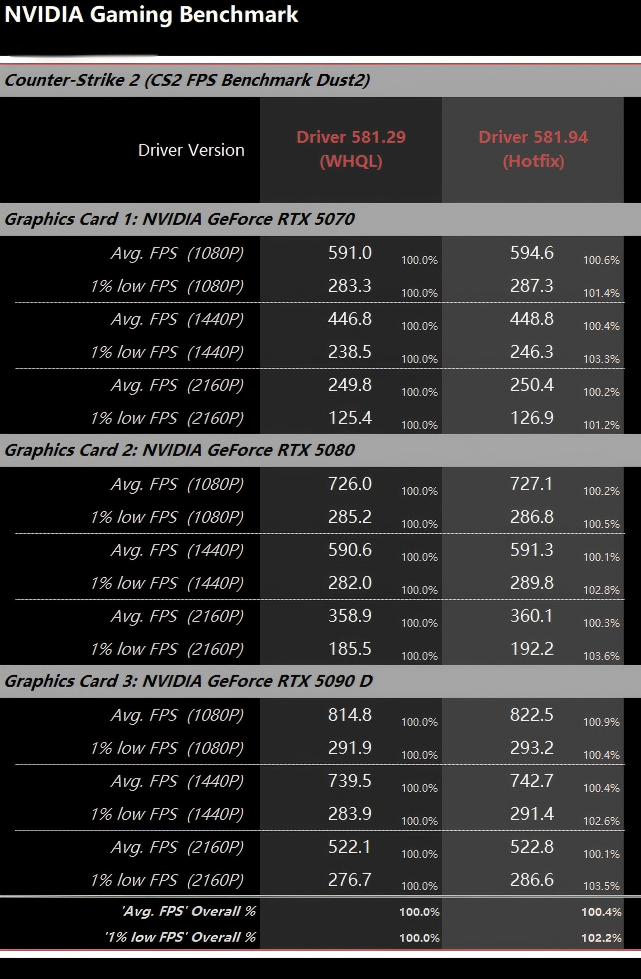
Recently, Microsoft's October update patch for Windows 11 has sparked widespread discussion among gamers. Many users reported noticeable frame rate fluctuations and stuttering in games such as Counter-Strike 2 after installing the update. In response, NVIDIA unusually released a hotfix driver (version 581.94) to address this issue. In tests conducted by a gaming content creator using Counter-Strike 2, the new 581.94 Hotfix driver showed significant improvements in both average FPS and 1% low FPS compared to the previous WHQL-certified driver (version 581.29)—with the 1% low FPS increasing by as much as 11.61%. To verify this performance gain, we tested three different graphics cards using the same two driver versions, benchmarking Counter-Strike 2 across three resolution settings.
Test Platform
- CPU: AMD Ryzen 7 9800X3D
- Motherboard: ASUS B850M AYW Gaming OC WiFi7 W (AMD B850 chipset, BIOS version 1091)
- Memory: SK Hynix DDR5 32GB (2×16GB, 5600 MHz, CL46-45-45-90, 1.10V)
- Graphics Cards:
- ASUS Prime RTX 5070 OC 12GB (NVIDIA GeForce RTX 5070)
- ASUS ROG Astral RTX 5080 OC 16GB (NVIDIA GeForce RTX 5080)
- ASUS ROG Astral RTX 5090 D OC 32GB (NVIDIA GeForce RTX 5090 D)
- System Drive: WD_BLACK SN8100 (2 TB, PCIe Gen5.0 x4, NVMe)
- CPU Cooler: Cooler Master 360 Atmos II White
- Power Supply: Seasonic Focus GX-1000 (1000W)
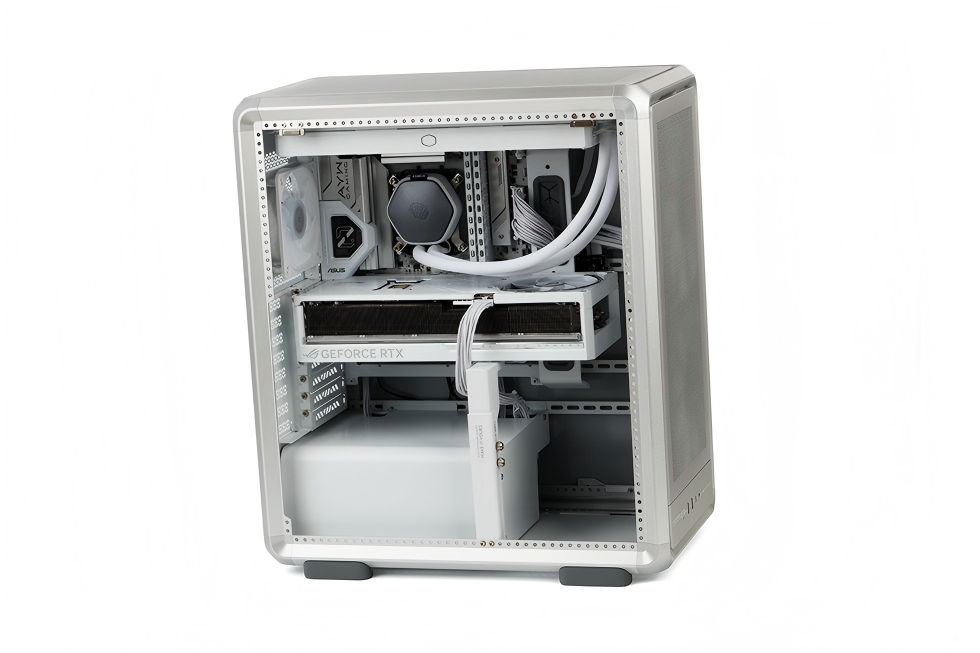
- Case: Cooler Master MasterFrame 500 Mesh
- Operating System: Windows 11 version 25H2
- GPU Drivers:
- NVIDIA GeForce Game Ready Driver 581.29 WHQL
- NVIDIA GeForce Hotfix Display Driver 581.94
- Test Game: Counter-Strike 2
Graphics Card Hotfix Driver Performance Comparison Test
Analysis based on benchmark results from Counter-Strike 2.
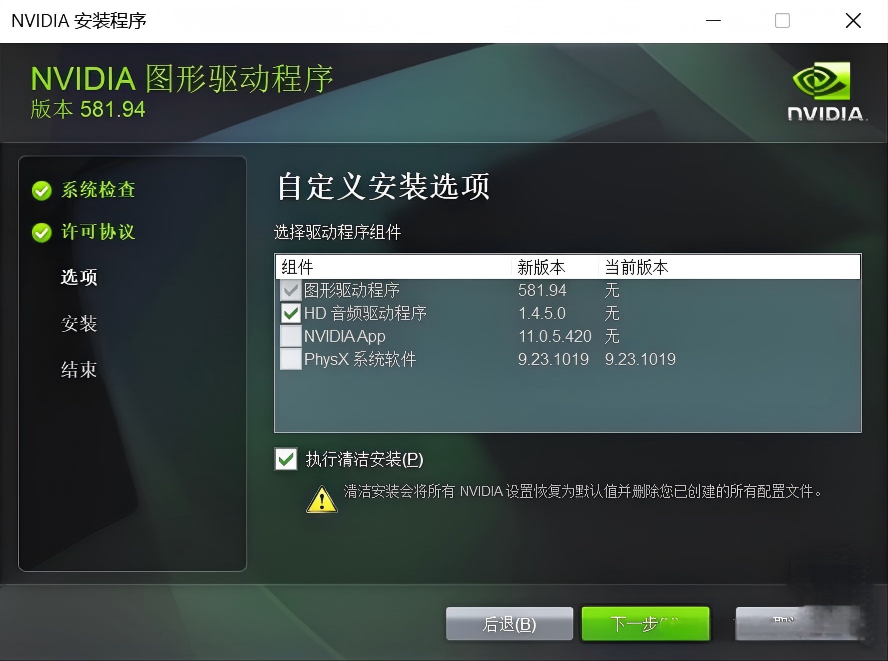
The test compared two driver versions: the older WHQL-certified version 581.29 and the newer hotfix driver.
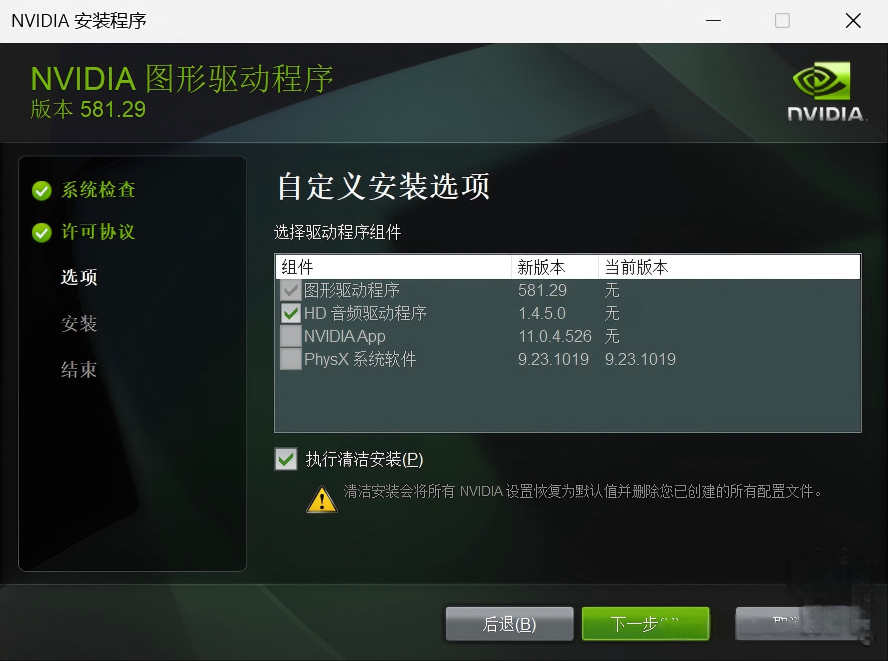
and the latest Hotfix version 581.94.
Let’s examine the test results for Counter-Strike 2 at three resolutions: 1080p, 1440p (2K), and 2160p (4K). It’s clear that the new Hotfix driver delivers better gaming performance than the older version—though the improvement is far less dramatic than the previously reported 11%. Across all three GPUs and three resolutions, the overall average FPS increased by only 0.4%, while the overall 1% low FPS improved by 2.2%. Notably, the gains in 1% low FPS were more pronounced at 2K and 4K resolutions.
Specifically, with the RTX 5070, 1% low FPS increased by 3.3% at 2K and 1.2% at 4K.
Switching to the RTX 5080, 1% low FPS improved by 2.8% at 2K and 3.6% at 4K.
With the RTX 5090 D, the 1% low FPS rose by 2.6% at 2K and 3.5% at 4K.
In summary, although the improvements in 1% low FPS at higher resolutions (2K and 4K) are modest, they do contribute to a slightly smoother and more consistent gaming experience.